Introduction to Physical AI
"The future of AI is not just in the cloud—it's in the world around us, interacting with the physical reality we inhabit every day."

Table of Contents
- What is Physical AI?
- The Evolution from Digital to Physical Intelligence
- Key Components of Physical AI Systems
- Applications Transforming Industries
- Challenges and Frontiers
- The Path Forward
What is Physical AI?
Physical AI represents a transformative convergence of artificial intelligence with the physical world, enabling machines to perceive, understand, and interact with their environments in intelligent ways.
Core Capabilities
At its core, Physical AI combines three fundamental capabilities:
| Capability | Description | Example Technologies |
|---|---|---|
| Perception | Sensing and understanding the environment | Computer vision, LiDAR, tactile sensors |
| Cognition | Processing information and making decisions | Neural networks, world models, planning |
| Action | Physical interaction with the world | Robotic arms, autonomous vehicles, actuators |
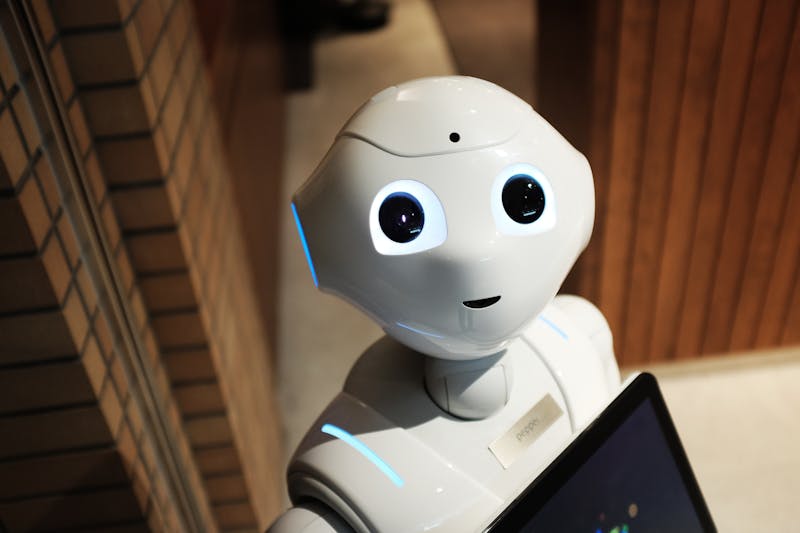
The Evolution from Digital to Physical Intelligence
The journey toward Physical AI began with purely computational AI systems. Deep learning revolution brought vision and NLP, but Physical AI adds the dimension of real-world physics.

Key Components of Physical AI Systems
1. Perception and Sensing
Physical AI systems rely on multiple sensor modalities:
- LiDAR: 3D point clouds for depth.
- IMUs: Tracking orientation and acceleration.
- Tactile Sensors: Measuring force and pressure.

2. World Models
Advanced systems can simulate potential actions before executing them. A robot's world model predicts physics constraints like gravity and friction.
3. Decision-Making and Planning
Physical AI systems use a hierarchy:
- High-Level Task Planning
- Motion Planning (A*, RRT)
- Low-Level Control (PID, MPC)

Applications Transforming Industries
- Manufacturing: Autonomous mobile robots (AMRs) in warehouses.
- Healthcare: Surgical robots with sub-millimeter accuracy.
- Agriculture: Autonomous tractors and weeding robots.

Challenges and Frontiers
1. The Sim-to-Real Gap
Models trained in simulation often fail in the real world due to unpredictable lighting or friction.

2. Computational Demands
Real-time processing (under 100ms latency) requires powerful hardware:
- GPU: NVIDIA RTX 4070 Ti (12GB VRAM).
- OS: Ubuntu 22.04 LTS.
Summary
- ✅ Physical AI bridges the gap between digital intelligence and physical action.
- ✅ It requires a tight loop of Perception, Cognition, and Action.
- ✅ High-performance hardware is essential for real-world deployment.